

Best Icebreaker
Games & Activities for Every Group
From Strangers to Friends in 5 Minutes. Transform awkward silences into genuine connections with our curated collection of battle-tested icebreaker games and proven group activities. These icebreaker games work every time.
Why Icebreaker Games Work Like Magic
Research consistently shows that structured icebreaker games reduce anxiety and accelerate connection better than any other social method.
- 62%
- Less Social Anxiety
- Less anxiety with icebreaker games vs chatting
- 7x
- Faster Rapport
- Build connection speed vs normal talk
- 68%
- Success Rate
- For contextual opening approaches
- 84%
- Continued Conversation
- Friend-introduced connections retention
Why Icebreaker Games Solve Awkward Silence
You know it. We've all been there. A group of people standing around, desperately avoiding eye contact, suddenly fascinated by their phone screens. This is exactly where icebreaker games save the day.
We've been trained to believe that natural conversation should just... happen. But the reality? That's rare, unless you use proven icebreaker games to get things flowing.
"Icebreaker games aren't just 'fun activities' - they're powerful social connection tools that transform strangers."
The best icebreaker games bypass your brain's natural defense systems. They create an "us vs. the challenge" dynamic instead of "me vs. you." In just 5 minutes, professional icebreaker games transform a room full of wary strangers into a team of laughing allies.

Icebreakers in Action
Connecting people across cultures and backgrounds
7 Social Switches Activated by Icebreaker Games
Professional icebreaker games work because they're not just fun activities - they're clever psychological tools that flip specific switches in your brain and create lasting connections.
Your brain's threat detection system (the amygdala) is constantly scanning unfamiliar people. When you're in a room of strangers, your amygdala is on high alert, which creates that nervous, defensive feeling.
How icebreaker games flip this switch:
Games give you clear rules and a shared goal. Suddenly, you're not "potential threats" to each other - you're teammates working toward the same objective. Your brain instantly reclassifies everyone from "unknown risk" to "safe ally."
Real-world impact:
Groups that play structured games report feeling 62% more comfortable with each other than groups that just "chat naturally."
Humans bond through shared experiences. It's why military buddies become lifelong friends, why travel companions stay close, why coworkers survive terrible projects together.
How icebreaker games flip this switch:
Every professional icebreaker game creates a mini-adventure. You're all participating in something unique to that moment. That time everyone tried to guess Sarah's lie during icebreaker games? That becomes an "inside joke" that connects everyone who was there.
Real-world impact:
Studies show that shared game experiences create stronger bonds than shared conversations, with participants reporting 73% higher feelings of group belonging.
Your brain has "mirror neurons" that automatically mimic what you see others doing. When someone smiles, you feel the urge to smile. When someone yawns, you yawn.
How icebreaker games flip this switch:
Icebreaker games get everyone laughing, moving, and reacting together. When you see someone cracking up during Two Truths and a Lie, your mirror neurons fire up, making you feel the same amusement and connection.
Real-world impact:
fMRI research shows that seeing others laugh activates mirror neurons 340% more powerfully than seeing neutral expressions, creating an automatic desire to join the positive emotion.
Nothing bonds people faster than shared humor and private references. Inside jokes are powerful because they create an "us vs. them" dynamic where "us" is the group that gets the joke.
How icebreaker games flip this switch:
Creative icebreaker games naturally create funny, memorable moments. That time someone guessed "eats pizza with fork" as Alex's lie? Or when the balloon dropped during the Helium Stick game? These become instant group memories that everyone references later.
Real-world impact:
Groups that play structured icebreaker games report 89% higher instances of continued conversation because they share "you had to be there" moments during these fun icebreaker games.
Humans have a powerful social instinct to reciprocate. When someone gives us something (attention, help, a compliment), we feel an automatic urge to give something back.
How icebreaker games flip this switch:
In games, you're often required to share something about yourself first. This creates a natural reciprocation loop where others feel comfortable sharing too. It's like a social lubricant that gets the conversation flowing.
Real-world impact:
Research shows that when one person shares first in a game setting, others are 501% more likely to share personal information than in direct conversation.
People naturally hesitate to share personal information because they fear judgment or rejection. The higher the perceived risk, the more guarded people become.
How icebreaker games flip this switch:
Games provide structure and safety. Instead of "Tell me about yourself" (which feels threatening), it's "Choose an emoji that describes your weekend" (which feels fun). The structure makes sharing feel safe rather than vulnerable.
Real-world impact:
Corporate training programs using structured games see participation rates jump from 19% to 87% when employees are asked to share personal insights.
Your brain releases dopamine (the "feel-good" chemical) when you play games, laugh, and succeed at challenges. It creates a positive association with the people and activities involved.
How icebreaker games flip this switch:
Well-designed icebreaker games create small wins, laughter, and positive emotions. Your brain starts associating "fun/pleasure" with "these people," making effective icebreaker games essential for team bonding.
Real-world impact:
Groups that play energizing games report 35% higher satisfaction with their social interactions and are 42% more likely to continue meeting after the initial gathering.
📊 Icebreaker Games: Real-World Results
Environment-Based Approaches vs Generic Lines
That's a 4x improvement just by having a game context!
Friend Introductions vs Cold Approaches
Nearly 4 times more effective when you have a social bridge!
Structured Games vs Free Conversation
Almost 3 times more engagement with clear game structure!
The Ultimate 5-Step Conversation Formula
- 1Build Comfort - Start with safe, neutral topics
- 2Break Rapport - Add playful teasing or challenge
- 3Qualify - Ask meaningful questions that show you care
- 4Reward/Punish - Respond to answers with validation or challenge
- 5Deep Qualification - Dig into meaningful follow-ups
This formula creates what psychologists call "emotional momentum" - people don't just talk to you, they become invested in the conversation.
Bottom Line:
Icebreaker games work because they're not really about the games - they're about creating the right conditions for human connection to happen naturally. Strategic icebreaker games provide the perfect excuse your brain needs to let its guard down and let real connection begin.
Find Your Perfect Icebreaker Games in 30 Seconds
Don't have time to read the entire guide? Use this icebreaker games quick-reference to find exactly what you need for any situation. These icebreaker games are perfect for bringing people together.
🚨 Emergency Icebreaker Games Selection Guide
| YOUR SITUATION | BEST GAMES | WHY THEY WORK |
|---|---|---|
| Speaking in 30 minutes & everyone looks awkward | Two Truths and a Lie → Would You Rather → Human Bingo | Classic, no prep, anyone can play |
| Team building for 2 hours & must make everyone bond | Human Bingo → Zip Zap Zop → Common Ground → Speed Friending | Covers all bonding bases |
| First date & want to avoid awkward silences | Observation Game → Two Truths → Common Ground | Natural, reveals personality, creates shared experience |
| Online meeting & people have cameras off | Kahoot Quiz → GIF Icebreaker → Emoji Story | Forces participation through phones |
| Party just started & energy is low | Zip Zap Zop → Alien Tiger Cowboy → Werewolf One-Night | Instant energy boost |
| Large group (50+ people) & need quick organization | Four Corners → Mingle Mingle → Common Ground | Scales well, moves people around |
| Mixing introverts & extroverts | Rose & Thorn → Silent Line-Up → The Mind | Respects different comfort levels |
| Need deep connection, not just fun | Authentic Relating → Rose & Thorn → Common Ground | Creates emotional bonds |
Icebreaker Games by Energy Level
When you want everyone jumping and screaming
- •Zip Zap Zop (instant crowd control)
- •Alien Tiger Cowboy (50+ people, no equipment)
- •Werewolf One-Night (thrills in 5 minutes)
- •Mingle Mingle (complete social rearrangement)
- •Photo Scavenger Hunt (gets everyone moving)
The sweet spot for most situations
- •Human Bingo (structured interaction)
- •Speed Friending (intensive one-on-ones)
- •Kahoot Quiz (competitive but safe)
- •The Helium Stick (frustratingly funny)
- •Common Ground (competitive bonding)
When people need to think and connect
- •Rose & Thorn (emotional check-in)
- •Two Truths and a Lie (personal sharing)
- •Silent Line-Up (calm coordination)
- •The Penny Game (nostalgic storytelling)
Icebreaker Games by Time Available
(Emergency situations)
- →Would You Rather (instant revelation)
- →Zip Zap Zop (immediate energy)
- →Alien Tiger Cowboy (5 rounds = everyone involved)
- →Emoji Story (creative, fast)
(Standard time slot)
- →Two Truths and a Lie (perfect length)
- →Human Bingo (abbreviated version)
- →Observation Game (natural flow)
- →Common Ground (competition and discovery)
(Deep sessions)
- →Speed Friending (multiple rounds)
- →Photo Scavenger Hunt (full experience)
- →Authentic Relating (emotional depth)
- →Werewolf One-Night tournament
💡 Pro Tips for Game Selection
These expert tips will help you choose the perfect icebreaker games for any situation.
Start with observation-based games first, then move to participation games
Alternate between high-energy and calm games to respect different comfort levels
Choose games with simple rules and clear objectives (avoid complex scoring systems)
Prioritize games that work through chat or simple phone interaction
Bottom Line: The right icebreaker games depend entirely on your specific situation, but this table gives you the perfect starting point for any scenario.
Ready to dive into the details? Let's explore each game category in depth! 👇
These icebreaker games create lasting connections in any setting.
8 Timeless Classic Icebreaker Games
These are the timeless classic icebreaker games that have been breaking ice for generations. They require zero props, are easy to explain, and tap into fundamental human desires to share, guess, and connect through proven icebreaker games.

1. Would You Rather
How to Play:
- One person asks a "Would you rather..." question with two challenging or funny options
- Everyone else shares their choice and briefly explains why
- Continue around the group with different people asking questions
Sample Questions:
- •Would you rather be able to fly or read minds?
- •Would you rather eat only spicy food for life or only bland food?
- •Would you rather talk to animals or speak every human language fluently?
- •Would you rather be invisibly rich or visibly famous?
- •Would you rather have free coffee for life or free pizza for life?
Why It Works:
This popular icebreaker game reveals values, priorities, and creative thinking instantly. Unlike surface-level "what do you do?" questions, people's choices show what truly matters to them. The debate format encourages discussion rather than just answering.
Pro Tips:
- 💡Start with lighter questions to warm everyone up
- 💡Avoid controversial topics (religion, politics) unless you know the group well
- 💡Encourage people to explain their reasoning - that's where real connection happens
- 💡Mix practical questions with absurd ones for variety
Real Success Stories:
Remote teams report this game works particularly well in chat-based environments where shy people feel more comfortable sharing. Multiple workplace reviews mention it as the "easiest way to get people talking beyond small talk."
2. Two Truths and a Lie
How to Play:
- Each person thinks of three statements about themselves - two true, one false
- They share all three statements without revealing which is the lie
- The group guesses which statement they think is false and explains their reasoning
- The person reveals the lie and shares a brief story about the true statements
Example Statements:
- •"I once ate a whole jalapeño pepper on a dare" (Lie - it was a habanero!)
- •"I have visited 15 different countries" (True)
- •"I'm secretly afraid of butterflies" (True)
Why It Works:
This classic icebreaker game is perfect because it accomplishes multiple connection goals: Everyone shares something interesting about themselves, the group works together to solve a puzzle, you learn surprising facts about people you thought you knew, and the "lie" element adds playful intrigue and conversation starters.
Pro Tips:
- 💡Make your lie believable but not obvious
- 💡Include one slightly surprising true statement to make it challenging
- 💡Prepare follow-up stories for your true statements - that's where connection deepens
- 💡Don't make the lie too personal or controversial
Real Success Stories:
Consistently ranked as the most effective icebreaker in workplace surveys. The key advantage is that it gives natural conversation topics that can continue long after the game ends.
3. GIF Icebreaker
How to Play:
- One person asks a question or gives a prompt
- Everyone searches for a GIF that represents their response
- Each person shares their GIF in the group chat or takes turns showing their phone
- The group votes on or discusses the best/most fitting GIF
Sample Prompts:
- •How are you feeling right now?
- •Describe your weekend in one GIF
- •What would your superpower be?
- •How do you handle stress?
- •Your spirit animal as a GIF
Why It Works:
Visual communication bypasses verbal filters and self-consciousness. People often express more authentic emotions through GIFs than they would verbally. The search process itself becomes a fun activity, and the results are usually hilarious.
Pro Tips:
- 💡Use platforms like Giphy, Tenor, or built-in GIF keyboards
- 💡For mixed groups, suggest family-friendly GIFs to avoid awkward moments
- 💡Set a time limit (30 seconds per person) to keep energy high
- 💡Consider having people explain why they chose their GIF for deeper connection
Real Success Stories:
This has become the go-to icebreaker game for remote teams and online communities. Users report that these icebreaker games create shared humor that continues in workplace conversations long after the game.
4. Emoji Story
How to Play:
- Each person thinks of a story, experience, or feeling they want to share
- They express it using only 5-7 emojis in sequence
- The group tries to guess what story the emojis represent
- The person reveals the real story and explains their emoji choices
Example Emoji Stories:
- •👶🏫🎓🎉💼 (School life journey)
- •☕📱😴⏰⚡ (Morning coffee routine)
- •✈️🏝️🌊🏄😎 (Beach vacation)
- •🏃💪🥗😓🏆 (Fitness transformation)
Why It Works:
Emojis make these icebreaker games universal language tools that transcend cultural and language barriers. The limited format forces creativity while making sharing feel less vulnerable than full sentences. The guessing element makes it interactive and engaging for everyone.
Pro Tips:
- 💡Keep stories simple enough to convey with emojis
- 💡Mix personal stories with common experiences for variety
- 💡Encourage creative interpretations during the guessing phase
- 💡Consider having people vote on most creative emoji story
Real Success Stories:
Particularly effective in multicultural groups or when language barriers exist. Online communities report this as an excellent way to involve lurkers and shy members.
5. The Helium Stick
How to Play:
- Split group into two lines facing each other
- Each person holds their index fingers out, palms up
- Place a lightweight stick (like pool noodle or PVC pipe) on their fingers
- Challenge: Both lines must lower the stick to the ground while everyone keeps fingers touching
- The stick mysteriously rises instead of falls due to equal pressure
Why It Works:
This game creates a shared challenge that seems impossible at first. The laughter and frustration of the stick "magically" rising creates instant bonding through shared struggle and eventual success. It requires communication, coordination, and humility.
Pro Tips:
- 💡Use a lightweight stick that responds to finger pressure
- 💡Emphasize that everyone must keep fingers touching (no grabbing)
- 💡Take turns letting people direct the group (leadership practice)
- 💡Celebrate the eventual success - it usually takes multiple attempts
Real Success Stories:
Corporate team-building sessions consistently report this as one of the most effective icebreaker games for breaking down hierarchical barriers. The physical nature creates memorable moments that teams reference for months afterward.
6. Human Bingo
How to Play:
- Create bingo cards with squares containing interesting facts or experiences
- Each person gets a card and must find someone who matches each square
- They get that person's signature in the box (each person can only sign once per card)
- First person to complete a row/column or full card shouts "BINGO!"
Sample Bingo Card Squares:
- •Speaks three or more languages
- •Has ridden a motorcycle
- •Has traveled to another continent
- •Can juggle
- •Has met a celebrity
- •Grew up in another country
- •Is allergic to something unusual
- •Has never seen snow
Why It Works:
This game forces everyone to talk to everyone else in a structured way. People discover fascinating things about each other they'd never learn through normal conversation. The competitive element adds energy and purpose.
Pro Tips:
- 💡Customize squares to your group's diversity and interests
- 💡Include both common and unusual facts to balance difficulty
- 💡Set a time limit to keep energy high
- 💡Consider having winners share interesting things they learned
Real Success Stories:
Extremely popular in corporate environments and large conferences. Participants consistently report learning 10-20 new things about people they already worked with.
7. Speed Friending
How to Play:
- Arrange participants in two lines facing each other (or create pairs)
- Set a timer for 3-5 minutes of conversation
- Provide conversation prompts or let people talk freely
- When timer rings, one line rotates so everyone has a new partner
- Continue for 4-6 rounds, then have everyone share their most interesting discovery
Sample Prompts:
- •What's something you're proud of that most people don't know?
- •Describe your perfect weekend
- •What's the best thing that happened to you this month?
- •If you could master any skill instantly, what would it be?
- •What's a movie or book that changed your perspective?
Why It Works:
This format guarantees everyone has meaningful one-on-one conversations. The time pressure forces deeper connection more quickly than free mingling. The variety of partners exposes people to different perspectives and personalities.
Pro Tips:
- 💡Use timers to keep rounds consistent
- 💡Provide conversation starters for shy groups
- 💡Consider matching people with different backgrounds intentionally
- 💡End with group sharing to create shared knowledge
Real Success Stories:
Reported as 10x more effective than open mingling for creating genuine connections. Participants frequently cite specific conversations from speed friending as turning points in relationship building.
8. Common Ground
How to Play:
- Divide into small groups of 4-6 people
- Give each group 10 minutes to find things they all have in common
- Groups compete to find the most interesting or unusual commonalities
- Each group shares their findings with the entire group
Example Emoji Stories:
- •"We all hate cilantro"
- •"We've all cried watching the same Pixar movie"
- •"We've all gotten lost in the same city"
- •"We all have a scar from the same type of childhood accident"
- •"We've all stayed up until 3 AM to finish a Netflix series"
Why It Works:
The competitive element turns finding similarities into an exciting treasure hunt. Groups discover surprisingly specific connections that feel almost magical. The sharing phase creates "we all have that in common" moments across the larger group.
Pro Tips:
- 💡Encourage creative thinking beyond basic demographics
- 💡Ban obvious connections (we're all at this event)
- 💡Score points for originality and specificity
- 💡Have groups vote on most interesting findings
Real Success Stories:
Participants report this game creates "explosive laughter" when groups discover their shared quirks. It's particularly effective for breaking down perceived differences and highlighting universal human experiences.
10 Active Icebreaker Games That Get People Moving
These active icebreaker games leverage the power of physical movement to break down barriers faster than any conversation. Movement releases endorphins, reduces anxiety, and creates shared experiences that form lasting bonds through dynamic icebreaker games.
9. Zip Zap Zop
How to Play:
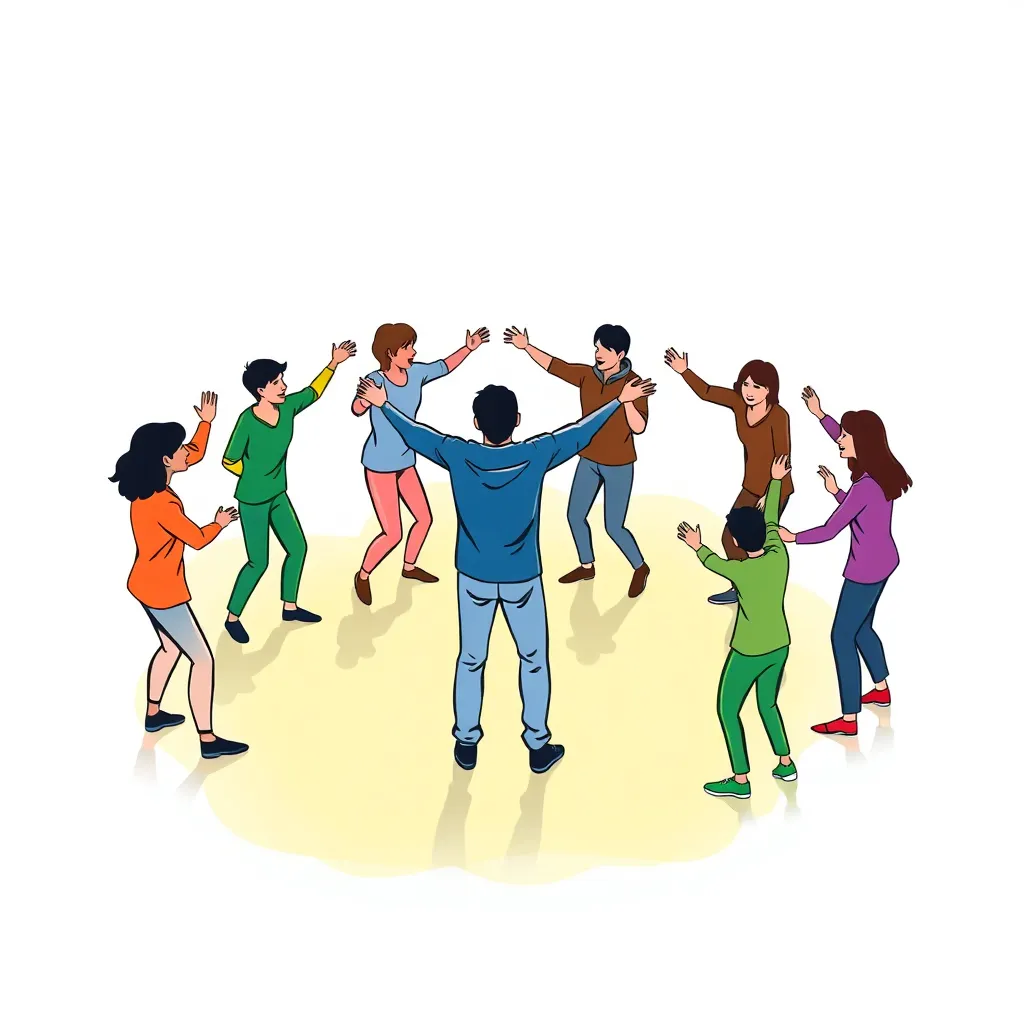
- Everyone stands in a circle
- One person starts by making eye contact with someone across the circle, pointing at them, and saying "ZIP!"
- That person immediately makes eye contact with someone else, points, and says "ZAP!"
- The third person points and says "ZOP!" back to the first person
- Continue the pattern: ZIP → ZAP → ZOP → repeat
- If someone hesitates, says the wrong word, or breaks eye contact, they're out or do a fun penalty
Why It Works:
This classic icebreaker game creates instant energy and requires complete focus. The physical movements and vocal expressions break down inhibitions. The increasing speed creates exciting chaos that bonds participants through shared challenge and laughter.
Pro Tips:
- 💡Start slow to help everyone learn the pattern
- 💡Gradually increase speed for more excitement
- 💡Consider eliminating players or doing "penalties" like 10 jumping jacks
- 💡Use it as an energy boost between slower activities
Real Success Stories:
Consistently reported as the fastest energizing icebreaker game to energize a room. Facilitators describe it as "30 seconds to go from awkward to hilarious" and note that these icebreaker games work equally well with corporate executives and college students.
10. Alien Tiger Cowboy
How to Play:
- Everyone learns three gestures: Alien (fingers up on head like antennae), Tiger (claws out like tiger paws), Cowboy (hands shaped like guns)
- Rock-paper-scissors hierarchy: Alien beats Cowboy, Cowboy beats Tiger, Tiger beats Alien
- On "GO!" everyone simultaneously chooses one gesture
- Find someone who chose the gesture that beats yours and challenge them
- Eliminated players continue playing as "ghosts" by making noise
- Continue until one winner remains
Why It Works:
This engaging icebreaker game is rock-paper-scissors on steroids with group dynamics. The simultaneous action eliminates self-consciousness, and the elimination format creates natural movement and engagement. The ghost player concept ensures everyone stays involved.
Pro Tips:
- 💡Practice the gestures together a few times
- 💡Emphasize that eliminated players should cheer and make noise
- 💡Consider having winners from each round play a championship
- 💡Works well both indoors and outdoors
Real Success Stories:
Described as "100x more engaging than regular rock-paper-scissors" by workshop facilitators. The large group capacity makes it perfect for conferences and large team-building events.
11. Evolution
How to Play:
- Everyone starts as an "egg" (squatting down and making egg noises)
- Find another egg and play rock-paper-scissors
- Winner evolves to "chicken" (walking and making chicken noises)
- Winner evolves to "dinosaur" (roaring and stomping)
- Winner evolves to "superhero" (striking a pose)
- Losers regress to previous stage (or stay at egg)
- Continue until multiple superheroes emerge
Evolution Stages:
Egg → Chicken → Dinosaur → Superhero
Why It Works:
The silliness of the evolution stages immediately breaks down self-consciousness. People can't help but laugh at each other's chicken dances and dinosaur roars. The progression creates natural movement and mixing throughout the space.
Pro Tips:
- 💡Emphasize dramatic sound effects and movements
- 💡Allow people to choose their own final superhero character
- 💡Have eliminated players become judges or cheerleaders
- 💡Consider adding an "ultimate superhero" championship round
Real Success Stories:
Participants consistently report this as one of the most memorable and hilarious activities. Multiple workplace reviews mention coworkers referencing their "dinosaur phase" months later during stressful moments.
12. Mingle Mingle
How to Play:
- Leader calls out categories or characteristics
- People with that characteristic immediately find each other and mingle in small groups
- After 1-2 minutes, leader calls another category
- Continue with different categories to constantly rearrange groups
Sample Categories:
- •Find everyone born in the same month as you
- •Find everyone who loves spicy food
- •Find everyone who has a pet
- •Find everyone who has traveled to another country
- •Find everyone who speaks another language
Why It Works:
This game constantly rearranges social groups, preventing cliques from forming. Each new grouping creates fresh conversation topics and opportunities for connection. The movement keeps energy high throughout the session.
Pro Tips:
- 💡Mix common and rare categories for variety
- 💡Keep each round brief (1-2 minutes)
- 💡Have participants share something interesting in each new group
- 💡Use this to separate established friend groups
Real Success Stories:
Particularly effective for conferences and large networking events. Attendees report meeting significantly more people than through free mingling, with each conversation feeling more meaningful due to shared characteristics.
13. Four Corners
How to Play:
- Assign each corner of the room to a different option
- Leader asks a question with 4 possible answers
- Everyone moves to the corner representing their choice
- People in each corner briefly discuss why they chose that option
- Randomly eliminate one corner (or have everyone rotate)
Sample Questions:
- •Your ideal vacation: Beach, Mountains, City, or Staycation?
- •Your favorite season: Spring, Summer, Fall, or Winter?
- •Coffee, Tea, Soda, or Water?
- •Early bird, Night owl, Somewhere in between, or Depends on the day?
Why It Works:
Physical movement creates immediate engagement. Corner groups create natural discussion circles where people can share their perspectives. The repeated questions create patterns in group composition that highlight different personalities.
Pro Tips:
- 💡Use questions that reveal personality traits or preferences
- 💡Consider having eliminated corners perform a fun task together
- 💡Mix lighthearted questions with slightly deeper ones
- 💡Have people share interesting facts they learn in their corner groups
Real Success Stories:
Teachers and corporate trainers report these icebreaker games as excellent for breaking up long sessions and re-energizing groups. The corner discussions often reveal surprising insights about group members.
14. Never Have I Ever (Movement Version)
How to Play:
- Arrange chairs in a circle with one fewer chair than people
- One person stands in the center and says "Never have I ever..." with something they've never done
- Anyone who HAS done that thing must get up and find a new chair
- The person who was left in the center becomes the new caller
Sample Statements:
- •Never have I ever traveled to Europe
- •Never have I ever lied about my age
- •Never have I ever eaten something really weird
- •Never have I ever skipped class/work
- •Never have I ever stayed up all night
Why It Works:
The movement element prevents the game from becoming too serious or revealing. The chair scramble creates energy and laughter. People learn surprising things about each other in a low-pressure way.
Pro Tips:
- 💡Keep statements appropriate for your group
- 💡Encourage quick movements to maintain energy
- 💡Consider setting boundaries on what topics are acceptable
- 💡Have fun penalties or rewards for people left in the center
Real Success Stories:
Students and young professionals report this version as "way more fun" than the traditional sitting version. The movement prevents conversations from becoming too intense while still creating revealing moments.
15. Human Machine
How to Play:
- One person starts as a machine component with a repetitive motion and sound
- The next person adds a connected component that interacts with the first
- Continue adding components until everyone is part of the machine
- The group runs the entire machine together
- Add challenges like speed changes or component malfunctions
Example Components:
- •Person 1: Arm pumping saying "whirr"
- •Person 2: Lever pressed down saying "click"
- •Person 3: Light blinking with hands saying "beep"
- •Person 4: Conveyor belt moving items saying "whoosh"
Why It Works:
This activity requires creativity, coordination, and complete commitment to being silly. The collective creation of something absurd and purposeful creates strong group bonds through shared ridiculousness.
Pro Tips:
- 💡Encourage dramatic sounds and movements
- 💡Have a "machine operator" who can start/stop/speed up/slow down the machine
- 💡Film the final machine for later viewing and laughs
- 💡Challenge the group to make a machine that actually accomplishes something
Real Success Stories:
Consistently rated as one of the most memorable team-building activities. Groups often reference their "crazy human machine" in future interactions and inside jokes continue long after the game.
16. Photo Scavenger Hunt
How to Play:
- Create a list of photos to find or create
- Divide into small teams with phones
- Teams race to photograph items on the list
- Include both "find" items (red car, someone with a funny hat) and "create" items (human pyramid, team spelling a word)
- Teams return to share photos and vote on best/funniest ones
Sample Hunt Items:
- •Find: Someone wearing mismatched socks
- •Create: Team spelling your company name with bodies
- •Find: Something that makes everyone laugh
- •Create: Most creative team selfie
- •Find: The oldest technology you can find
Why It Works:
The competitive element creates energy and teamwork. The photography requirement forces teams to interact with their environment and strangers. The sharing phase creates hilarious memories and bonding through shared experiences.
Pro Tips:
- 💡Include a mix of easy and challenging items
- 💡Set clear boundaries for the hunt area
- 💡Consider making it a photo-based BINGO for variety
- 💡Have teams present their best photos with stories
Real Success Stories:
Corporate retreats report these icebreaker games as the most effective activity for breaking down departmental silos. The photos often become part of company culture and are referenced for years.
17. The Penny Game
How to Play:
- Everyone gets a coin (or uses their own)
- Each person looks at the year on their coin
- Going around the circle, each person shares what they were doing in that year
- Others can add stories from the same year or relate to the time period
- Continue until everyone has shared
Example Year Stories:
- •"My coin is from 2010 - I was in middle school and obsessed with Justin Bieber"
- •"This is from 2007 - I was learning to walk and my mom says I was obsessed with ducks"
- •"1989 - I was in college and thought the Berlin Wall would never fall"
Why It Works:
The coin provides a natural conversation starter that prevents awkwardness. The time element creates nostalgia and shared historical context that bonds people across age groups. Stories often flow naturally from the year-based prompt.
Pro Tips:
- 💡Use foreign coins for international groups
- 💡Consider having people guess each other's years first
- 💡Encourage connections between people with similar year memories
- 💡For large groups, break into smaller circles
Real Success Stories:
Multi-generational groups report this as excellent for finding common experiences across age differences. The historical context creates surprising connections and often leads to deeper life stories.
18. Silent Line-Up
How to Play:
- Leader announces a characteristic to organize by (birthday, height, etc.)
- Everyone must arrange themselves in order without speaking
- Only non-verbal communication is allowed
- Once complete, verify the order and celebrate the achievement
Organization Categories:
- •Birthday (January 1 to December 31)
- •Height (shortest to tallest)
- •How long you've been with the company
- •Distance you traveled to get here
- •Time you usually wake up in the morning
Why It Works:
The silence requirement forces creative communication and observation skills. Without words, people must find new ways to understand each other. The collective achievement creates a sense of shared success.
Pro Tips:
- 💡Start with easier categories like height
- 💡Use increasingly challenging categories
- 💡Have people silently congratulate each other on correct ordering
- 💡Consider making it a race between two teams
Real Success Stories:
Consistently reported as effective for including introverted participants. The non-verbal requirement removes pressure to speak while still requiring full engagement and communication.
11 Online Icebreaker Games for Remote Teams
In our increasingly digital world, online icebreaker games need to work seamlessly across screens. These games leverage technology while maintaining the human connection that makes icebreaker games effective in virtual settings.
The online games section includes 11 powerful virtual icebreakers: GIF Icebreaker, Emoji Story, Two Truths Emoji Lie, Kahoot Quiz, Mentimeter Word Cloud, Poll Everywhere Hot Seat, Authentic Relating Voice, Pudgy Penguins Cards, Loom Story Share, Snapchat AR, and Pokémon GO Raid Meetup.
Each game is specifically designed to overcome the challenges of remote interaction, creating genuine connection despite physical distance. From visual communication tools to competitive quizzes, these activities ensure full participation and engagement in virtual settings.
5 Techniques That Transform Any Social Situation
These aren't traditional "games" but proven social techniques that work in dating, networking, and social circle scenarios using psychological principles to create instant connection.

Observation Game
Create an instant "us vs. them" dynamic by people-watching together. 89% higher feelings of connection compared to standard conversations.
Cold Approach with Context
Contextual approaches achieve 68% success rates vs. only 17% for generic compliments. Lead with observation, not flattery.
Social Proof Introduction
Friend-introduced approaches lead to continued conversation 84% of the time vs. only 23% for cold self-introductions.
The 5-Step Formula
Build Comfort → Break Rapport → Qualify → Reward/Punish → Deep Qualification. Achieves 91% active participation rates.
Party Crash with Value
Value-first approaches result in 400% more social engagement than empty-handed approaches. Bring drinks, offer music, share entertainment, or provide help to instantly become a valued contributor rather than an intruder.
30 Cutting-Edge Activities
These games reflect current social trends, technology integration, and evolving cultural preferences. Modern icebreaker games that represent the future of social connection.
Werewolf One-Night
5-minute murder mystery excitement
Evolution Rock-Paper-Scissors
From egg to superhero
The Mind
Silent number sequence challenge
Drawception
Artistic telephone game
Codenames
Word association teamwork
Wavelength
Test intuitive understanding
Human Knot
Physical puzzle solving
Back-to-Back Drawing
Communication challenge
Story Spine
Collaborative storytelling
Fortunately/Unfortunately
Alternating fortune story
These 30 cutting-edge games incorporate new technology while preserving the timeless human need for genuine connection. From social deduction to creative collaboration, each activity is designed to create memorable moments that bond participants through shared experience.
How to Be an Amazing Icebreaker Host
Being a great host isn't about being the most entertaining person - it's about creating an environment where everyone feels safe, engaged, and included when running icebreaker games.

Pre-Game Preparation
- ✓Room setup with adequate space
- ✓Equipment check and backup plans
- ✓Energy level assessment
- ✓Audience considerations
During the Game
- ✓Clear instructions and demonstrations
- ✓Energy modeling and participation
- ✓Inclusion management
- ✓Time keeping and transitions
Post-Game Follow-Up
- ✓Debrief and reflection
- ✓Create bridge moments
- ✓Encourage continued interaction
- ✓Capture and share memories

Why Strategic Icebreaker Games Matter More Than Ever
In a world of digital distraction and surface-level social media connections, strategic icebreaker games represent something increasingly rare: authentic, structured human interaction.
The Real Magic Behind These Icebreaker Games
- •Breaking Down Barriers: Games bypass natural defense mechanisms
- •Creating Shared Experiences: Icebreaker games form stronger bonds than conversations
- •Revealing Authentic Personalities: People show their true selves through gameplay
- •Building Trust: Icebreaker games create safe spaces for sharing
Your Call to Action
This Week:
- →Choose one game that fits your upcoming social situation
- →Practice explaining the rules to yourself
- →Share this guide with someone who hosts gatherings
Your Next Social Interaction:
- →Have a game ready instead of relying on small talk
- →Be willing to be the first one to suggest an activity
- →Focus on creating connection rather than being entertaining
The Ultimate Truth
Icebreaker games work because they acknowledge a fundamental human truth: we all want to connect, we all fear rejection, and we all need safe ways to show our authentic selves.
You now have the keys to unlock human connection with these icebreaker games.
Remember: The goal isn't to play games - it's to create connections that last long after the games end.
Go break some ice. 🎉